
What we do for a ceiling leak
We take moisture readings above and around the wet area, remove standing water, and set up drying for the ceiling, walls and floor below.
- Find the water. Readings show how far it spread across the ceiling, into insulation and down the walls.
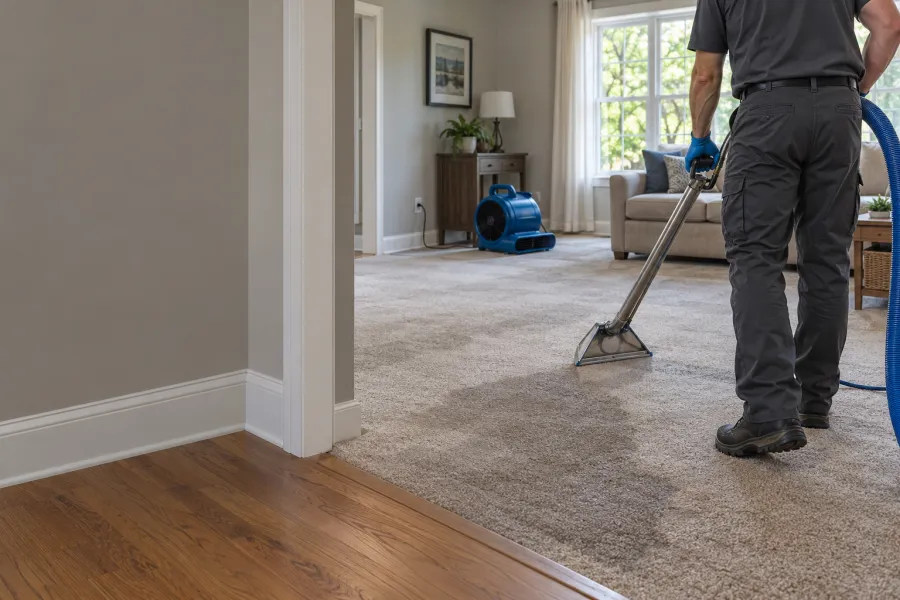
- Remove what’s standing. We extract water from the floor, carpet and pad below the leak.
- Dry the structure. Air movers and dehumidifiers run until readings show the materials are dry. Read about structural drying.
- Show you what we found. Readings and photos show what can be dried in place and what has to come out, including wet insulation.
Roof leak or plumbing leak?
Water during a storm usually points to the roof. Water on a dry day often means an upstairs bathroom, a supply line or an AC drain line.
A plumber fixes a plumbing leak and a roofer fixes the roof. We dry what got wet inside and document it for your claim. If the drip is near your air handler, see AC leaking water.
Why a ceiling needs more than a fan
Water spreads across the top of the drywall and soaks into insulation where you can’t see it. Readings show how far it went before it’s closed up.
Insurance and ceiling leaks
Sudden plumbing leaks and storm damage are often treated differently from slow leaks. Your carrier decides coverage, and we document the loss.
We share our photos, readings and drying records with you and your adjuster. Read more about how a claim works with United.