
When you need water extraction
Any time water is standing on your floors or has soaked into carpet and pad, from a burst pipe, an appliance leak, an overflow or a storm.
Common sources we see:
- Burst or frozen pipes and failed supply lines
- Water heaters, washing machines, dishwashers and refrigerator lines
- Toilet and tub overflows
- Storm water and heavy rain coming inside
- AC and HVAC drain lines
What we do on site
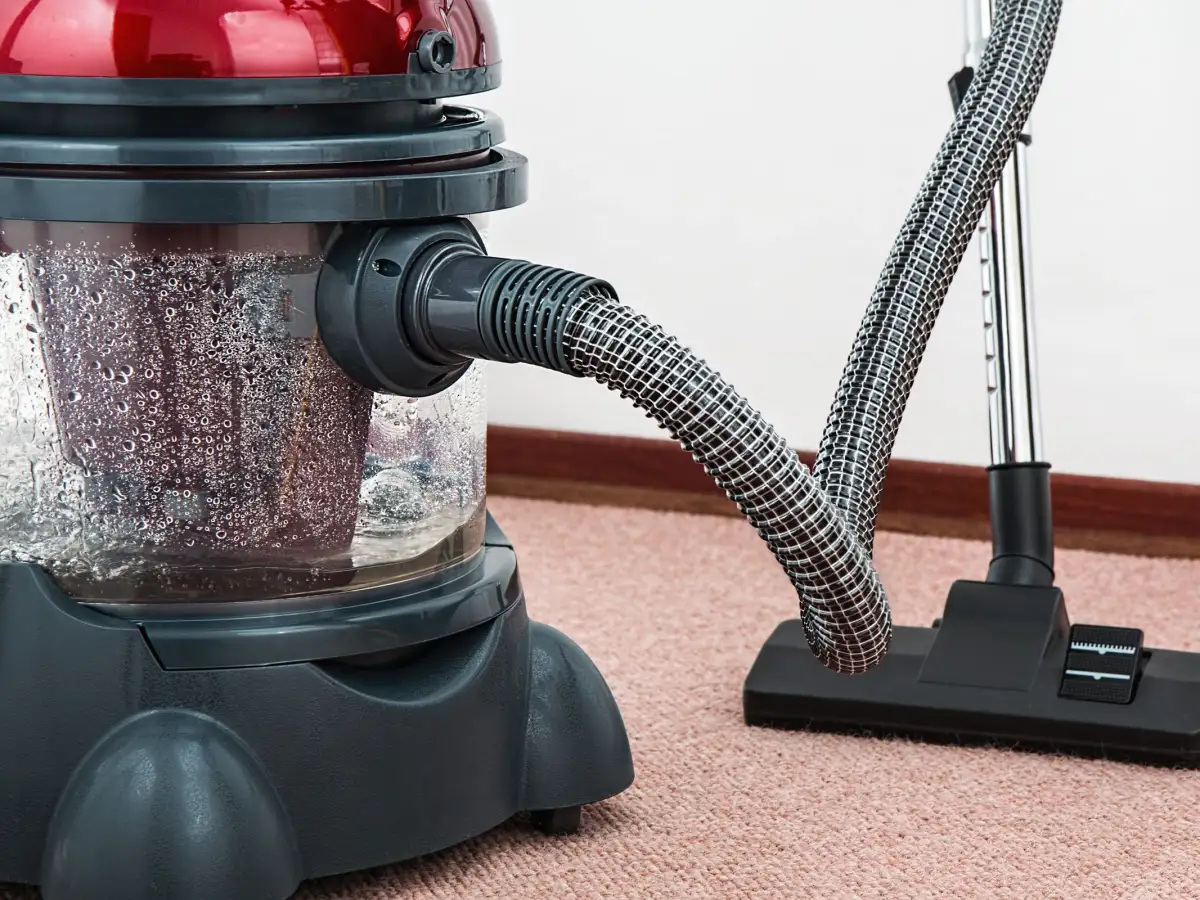
We check for safety, find where the water went, remove it with extraction equipment and take moisture readings to map what got wet.
- Safety first. We look for electrical hazards and make sure the water source is stopped. If a pipe needs repair, a plumber fixes it.
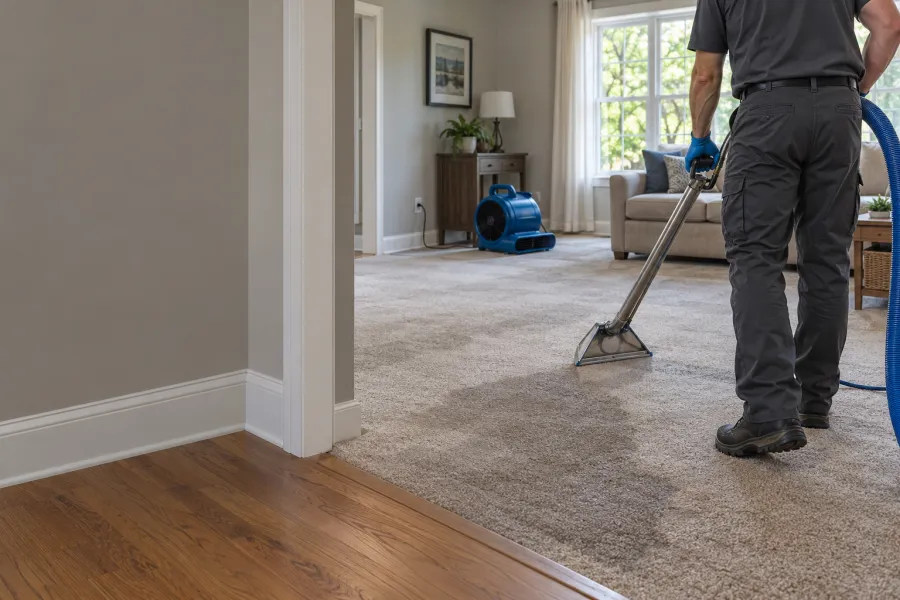
- Extraction. We remove standing water from carpet, pad and hard floors.
- Contents. We help move or protect furniture and belongings in the affected rooms.
- Moisture mapping. Readings show where the water traveled, including under flooring and inside walls.
- Drying setup. Air movers and dehumidifiers go where the readings say they’re needed. See structural drying.

Carpet, pad and hard floors
Carpet can often be extracted and dried in place after a clean-water leak. Pad and some flooring may need to come out. Readings guide that call.
Contaminated water is different. Carpet and pad touched by sewage are usually removed for safety. We’ll show you what we found and explain the proposed work before anything comes out.
Why prompt extraction matters
The longer water sits, the further it wicks into drywall, subfloors and cabinets. Removing it promptly limits how much has to be dried.
That’s why we answer 24/7 and dispatch as quickly as possible. When you call, we’ll give you an honest estimated arrival time.

Documented for your insurance
We photograph the damage and record moisture readings before, during and after extraction, then share them with you and your adjuster.
Coverage decisions belong to your insurance carrier. Read more about how a claim works with United.