Shut off the main water valve
Find your main shut-off valve and turn it clockwise until it stops. It’s usually where the main water line enters the house.
Look in the garage, a utility closet or near the water heater. If you can’t find it or it won’t turn, the shut-off at your water meter near the street can stop the water, though it may need a meter key. Your water utility can also help.
Make the area safe
Stay out of standing water if the power is on. Only switch off breakers for wet rooms if you can reach the panel from somewhere dry.
Don’t plug in or unplug anything while standing in water. If water is coming through a ceiling, stay out from under it. A wet ceiling can be heavy.
Turn off the water heater
With the main water off, set a gas water heater to its pilot or vacation setting, or switch off the breaker for an electric one.
That keeps the heater from running with no water coming in. You can turn it back on once the water is restored.
Drain the lines
Open a faucet on the lowest level of the house to drain the water left in the pipes. That relieves pressure and limits how much more leaks out.
Photograph everything
Before you move anything, take wide photos of each wet room and close-ups of damaged items. Your insurance company may ask for them.
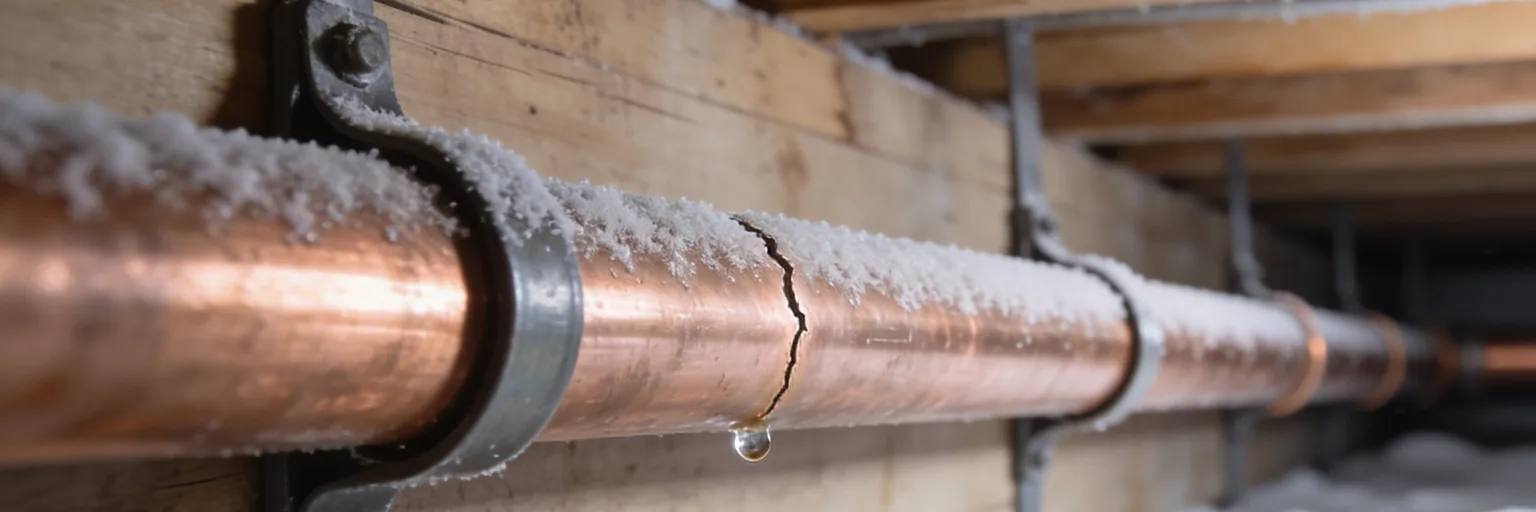
Photograph the burst pipe too, if you can see it. Keep damaged items until your insurance company says you can throw them out.
Move what you can
If it’s safe, move electronics, papers, photos and rugs out of the water. Put foil or wood blocks under furniture legs on wet carpet.
Call for help with the water
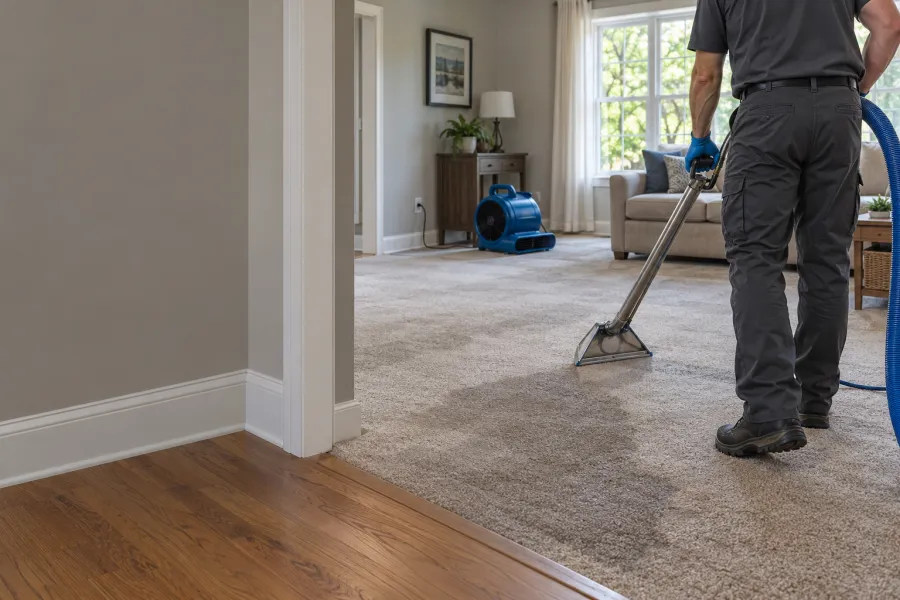
A plumber fixes the pipe. A water damage company removes the water and dries the house. Call us any time, day or night, and we’ll help.
Call or text United Solutions at (405) 519-3568. We’ll talk you through what to do next and give you an honest estimated arrival time. Read how water extraction works.
Preventing the next one
In a hard freeze, let faucets on outside walls drip, open the cabinet doors under sinks and keep the heat on, even when you’re away.
Disconnect garden hoses and cover outdoor spigots before the first freeze. Oklahoma winters can turn from mild to a hard freeze quickly, so it’s worth doing every year.