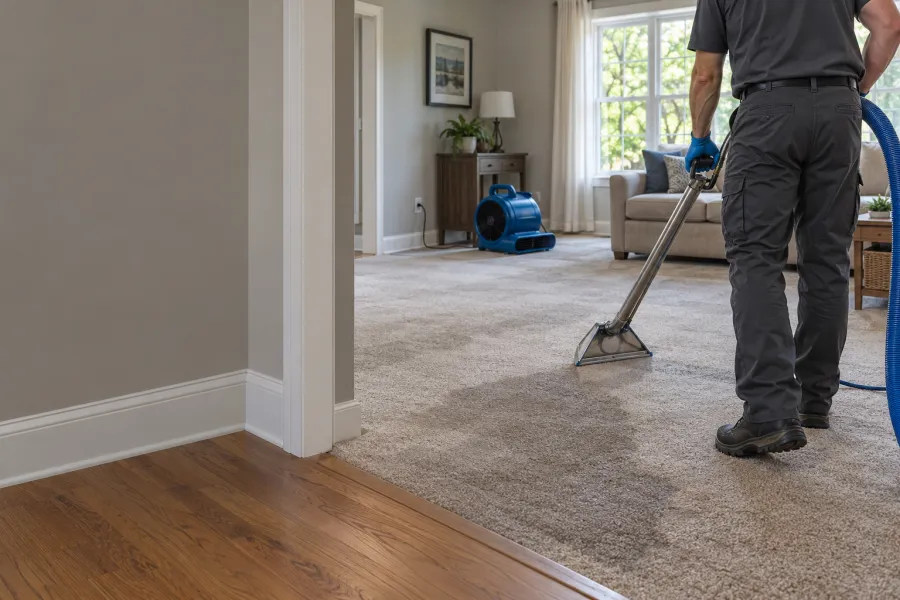
What affects drying time
How much water there was, how long it sat, which materials got wet, and the temperature and humidity in your home all change drying time.
- Amount of water. One wet room dries faster than water that spread under walls into the next room.
- Time. Water that sat for a day has soaked further into drywall, framing and subfloors.
- Materials. Hardwood, plaster and concrete hold water longer than carpet or drywall.
- Conditions. Humid summer air and closed-up rooms slow drying down.
A typical timeline
Many clean-water jobs dry in about three to five days once equipment is running. Larger losses and dense materials can take longer.
That’s a general range, not a promise for your home. We check progress on each visit and tell you what we’re seeing.
How we know it’s dry
We take moisture readings on each visit and compare wet materials with dry ones elsewhere in your home. Equipment comes out when they match.
Why surfaces can fool you
Carpet and drywall can feel dry on the surface while the pad, framing or subfloor underneath is still wet. Readings find what touch misses.
What slows drying down
Turning equipment off, opening up rooms we’ve closed off for drying, and humid air outside can all slow drying. Leave the equipment running.
What happens after drying
Once readings show materials are dry, we remove the equipment, go over the readings with you and provide the drying documentation.
If materials had to come out, they’ll need to be replaced, and we’ll talk through next steps with you. Read more about structural drying.